Cruises · Experiential Travel · Luxury Cruises · South Pacific · Yacht Charters
Why French Polynesia, Tahiti & Bora Bora Are Best Experienced by Cruise or Private Charter
We are a Virtuoso Member travel agency. If you book through us, we may earn compensation from the hotel or travel supplier (typically at no additional cost to you). All of our recommendations are made wholeheartedly with the intent of helping travelers discover the world authentically and responsibly.
Here’s the paradox of traveling to French Polynesia: you fly eight or more hours across the Pacific to reach one of Earth’s most spectacular archipelagos, then plant yourself on a single island and see almost none of it.
The geography makes this understandable. French Polynesia spans 118 islands scattered across an ocean area roughly the size of Western Europe. Hopping between them by air means multiple flights, repeated packing and unpacking, and logistics that eat into precious vacation days. So most travelers simplify: fly to Bora Bora, check into an overwater bungalow, fly home. Beautiful, yes. But a fraction of what’s possible.
There’s another way. Cruising or chartering through French Polynesia, Tahiti, and Bora Bora unlocks the destination the way it was meant to be experienced: the way Polynesians themselves have navigated these waters for over a thousand years. You unpack once and wake up somewhere new. You access lagoons, motus, and anchorages that no resort guest will ever see. And in the case of private charters, you might spend less than you’d expect.
The Case for Water-Based Exploration
The Math Problem
Consider the logistics of a land-based, multi-island itinerary. Each island requires an inter-island flight on Air Tahiti, a boat transfer to your resort, check-in, orientation, and the inevitable adjustment period before you settle in. Do this three or four times across a ten-day trip and you’ve lost substantial hours to transitions.
A cruise or charter inverts this equation. You unpack once. Your floating accommodation moves while you sleep, and you wake anchored in a new lagoon, ready to explore. The transitions happen invisibly. The math works in your favor: more islands, more experiences, less friction.
The Access Problem
French Polynesia’s most beautiful places don’t all have resorts. Many of the most pristine motus (small islets), the most spectacular snorkeling passes, and the most serene anchorages are accessible only by water. The Tuamotu atolls, in particular, reward water-based exploration: imagine anchoring inside a ring-shaped reef, the lagoon glowing impossible shades of turquoise, with no other visitors in sight.
A private charter or small-ship cruise grants access to these places. Your crew knows the hidden spots. Your tender (or kayak, or paddleboard) takes you to shores that appear on no hotel transfer schedule. You swim with manta rays in passes where the only other boats belong to local fishermen.
The Authenticity Argument
Polynesian culture is fundamentally maritime. The ancestors of today’s Tahitians navigated thousands of miles of open ocean using stars, currents, and the flight patterns of birds. Fishing, sailing, and the relationship with the sea remain central to daily life. Experiencing French Polynesia from the water connects you to how this place has always been understood, how it still understands itself.
Village visits happen by tender rather than tour bus. You arrive at the pace of the sea, greeted on beaches rather than in parking lots. The perspective shifts from tourist observing a destination to traveler moving through a living culture.
Small-Ship Cruising: The Paul Gauguin Experience
For travelers who want the multi-island experience without managing their own vessel, the m/s Paul Gauguin offers a purpose-built solution. This isn’t a mega-ship that happens to stop in Tahiti. The Paul Gauguin was designed specifically for Polynesian waters, with a shallow draft that allows access to lagoons and ports larger cruise ships can’t enter.
At just 332 guests maximum, the intimacy is incomparable to mainstream cruising. Itineraries focus entirely on French Polynesia: the Society Islands (Bora Bora, Taha’a, Huahine, Mo’orea), the Tuamotus (Rangiroa, Fakarava), and extended voyages to the remote Marquesas. You’re not stopping in Polynesia between Caribbean ports. You’re immersing in it.
The onboard experience reflects this focus. Les Gauguines, a troupe of Polynesian cultural ambassadors, share traditional dance, music, and crafts throughout the voyage. The retractable watersports marina at the stern allows guests to kayak, paddleboard, and snorkel directly from the ship when anchored in calm lagoons. Dining showcases French-Polynesian fusion, and the service carries the genuine warmth that characterizes Tahitian hospitality.
For those booking through a Virtuoso-affiliated advisor, additional amenities often include shipboard credits, exclusive shore experiences, or cabin upgrades when available. These benefits don’t change the cruise itself, but they add meaningful value to an already exceptional experience.
Private Yacht Charter: Freedom, Flexibility, and Surprising Value
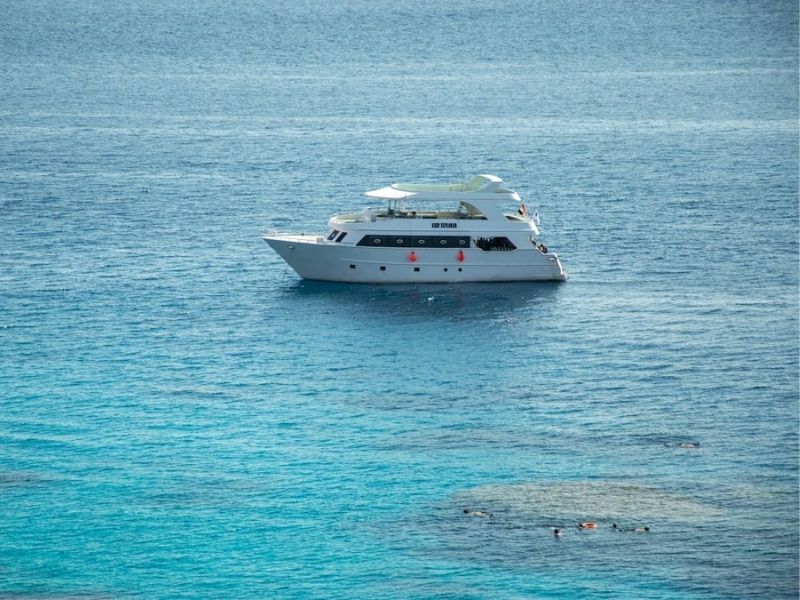
If small-ship cruising offers curated exploration, private chartering offers complete freedom. You choose the islands. You set the pace. You decide whether to linger an extra day in an anchorage you love or sail on to discover what’s around the next headland. For travelers who bristle at fixed itineraries, this is the answer.
The Surprisingly Affordable Option
Here’s what surprises most travelers: chartering a private catamaran in French Polynesia often costs less than a luxury cruise or a week at a top resort.
Crewed catamaran charters start at approximately $20,000 per week during low and shoulder seasons, accommodating up to six or eight guests comfortably. Add provisioning (food and beverages prepared by your onboard chef, typically $100 to $150 per person per day) and you have a complete, all-inclusive experience.
Now consider the math. A family of four on a week-long charter at $20,000, plus provisioning at around $4,000 to $5,000 total, comes to roughly $6,000 to $6,500 per person for a private yacht experience with a dedicated crew and chef. That’s comparable to what you’d pay per person at a mid-tier overwater bungalow resort, but you’re seeing multiple islands instead of one, and you have the entire boat to yourselves.
The value becomes even more compelling for groups. Two families traveling together (six to eight guests) split that same $20,000 charter fee plus provisioning, bringing per-person costs down to roughly $4,000 to $5,000 for the week. Compare that to a luxury cruise like the Paul Gauguin, where a family of four can easily spend $30,000 to $50,000 or more depending on cabin category. The charter delivers a completely private experience at a fraction of the cost.
For travelers who assumed private yacht charter was reserved for the ultra-wealthy, this recalculation is revelatory. You’re essentially renting a floating villa with professional crew, visiting islands and anchorages no resort guest will ever see, and potentially spending less than you would on a conventional luxury vacation.
What Charter Life Looks Like
Modern sailing catamarans designed for charter offer space and stability that surprise first-timers. Wide beam means minimal rocking even in open water. Multiple cabins, each with private bathrooms, provide genuine privacy. Expansive deck space includes shaded cockpits for dining, trampolines for lounging, and swim platforms for easy water access.
A crewed charter typically includes a captain (who handles all navigation, anchoring, and sailing) and a chef/hostess (who prepares meals, maintains the boat, and assists with activities). You’re not responsible for anything except deciding where you’d like to go and what you’d like to eat. Wake up to fresh coffee and fruit as the sun rises over Bora Bora’s Mount Otemanu. Spend the morning snorkeling a coral garden your captain knows. Enjoy lunch at anchor in a private bay. Sail to your next destination in the afternoon while napping on deck or watching dolphins ride the bow wave.
The typical charter routing in French Polynesia loops through the Leeward Islands: departing from the sailing hub of Raiatea, visiting Taha’a (the vanilla island), circling Bora Bora’s legendary lagoon, and perhaps venturing to Huahine’s wild, less-visited shores. Seven days covers this circuit comfortably. Ten or fourteen days allows deeper exploration or extensions to other island groups.
Bareboat vs. Crewed: Understanding Your Options
Experienced sailors with appropriate certifications can charter “bareboat,” taking the helm themselves. This offers maximum independence and lower cost (no crew salaries), but requires genuine sailing competency and familiarity with the local waters.
For most travelers, crewed charters make more sense. You’re on vacation, not conducting a sailing exam. The crew handles everything while you focus on experiencing the destination. They know the best anchorages, the hidden snorkeling spots, and how to read the weather. They’ve built relationships with local villages that translate into authentic encounters no guidebook mentions.
What You’ll Experience That Resort Guests Won’t
Whether you choose a small-ship cruise or private charter, water-based exploration opens experiences unavailable to land-based travelers:
Motu picnics on uninhabited islets. Your crew motors ahead to set up a beach barbecue. You arrive by tender to find grilled fish, chilled rosé, and a stretch of white sand with not another soul in sight. This is standard operating procedure on charters, and the Paul Gauguin offers similar experiences on its exclusive motu, accessible only to guests.
Snorkeling pristine passes without crowds. The famous passes of the Tuamotus (Tiputa in Rangiroa, Garuae in Fakarava) are drift snorkels and dives of extraordinary beauty: walls of sharks, clouds of fish, visibility stretching 100 feet or more. Timing your visit from a boat means hitting these passes at optimal conditions, often with no other snorkelers present.
Sundowners in anchorages where yours is the only boat. As the afternoon light turns golden, you’re anchored in a bay that has no dock, no restaurant, no other presence but the sound of water against the hull. Your chef prepares appetizers while you swim off the stern. This privacy, this stillness, simply doesn’t exist at busy resort destinations.
Night sailing under the Southern Cross. On longer passages, you may sail through the night, the same stars that guided ancient Polynesian navigators wheeling overhead. It’s a profound connection to place and history that no hotel room provides.
Village visits timed to local rhythms. When you arrive by water, you arrive as guests, not as a tour group on a schedule. Conversations happen naturally. You might be invited to share a meal, watch a local ceremony, or simply sit and talk. The pace is human, not commercial.
Who This Is For (And Who It Isn’t)
Water-based exploration is ideal for: Travelers who value variety and discovery. Families seeking a private, flexible experience at potentially lower cost than luxury resorts. Multi-generational groups who want shared adventure without the constraints of hotel schedules. Divers and snorkelers who want to access the best sites. Anyone who has already experienced the iconic overwater bungalow and is ready for something deeper.
Consider other options if: The overwater bungalow experience is specifically what you’re seeking (nothing replicates that iconic stay). You prefer not to spend extended time on the water. You have mobility concerns that make boat access challenging. You want the full-service infrastructure of a resort with spa, multiple restaurants, and organized programming.
The hybrid approach: Many travelers combine a charter week with a few nights at a resort, capturing both experiences. Begin with water-based exploration of multiple islands, then finish with three or four nights at the Four Seasons Bora Bora or Le Taha’a by Pearl Resorts for the resort experience without limiting your entire trip to a single island.
Planning Your Water-Based French Polynesia Experience
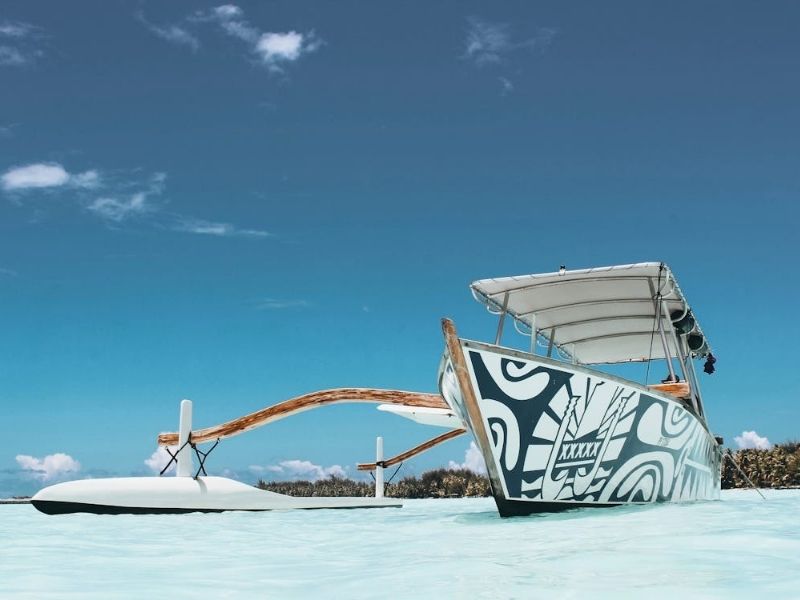
Best seasons for sailing: The dry season (May through October) offers the calmest conditions, lower humidity, and reliable trade winds. This is also peak season, so both charters and cruises book early. The shoulder months of April/May and October/November can offer excellent sailing with better charter availability and rates starting around $20,000 per week. The Tahiti Tourism Board provides detailed seasonal guidance.
Charter logistics: Raiatea is the primary charter base in French Polynesia, with the largest selection of vessels and operators. You’ll fly into Tahiti on Air Tahiti Nui, then connect to Raiatea on Air Tahiti. Peak season charters book twelve or more months in advance for the best vessel selection.
What’s included vs. extra: Charter fees typically cover the vessel and crew. Provisioning (food, beverages, special requests) is usually additional, budgeted at $100 to $150 per person per day for high-quality meals and drinks. Fuel costs depend on itinerary but are generally modest for sailing vessels. Crew gratuities (customarily 15 to 20 percent of the charter fee) are discretionary but expected for good service. National park and marina fees are minor additions.
Why working with an advisor matters: The charter industry has significant variation in vessel quality, crew professionalism, and operator reliability. An experienced travel advisor has vetted operators firsthand, understands contract nuances, and can match you with the right vessel for your group’s needs. They coordinate international and inter-island flights, handle the inevitable timing complexities, and provide backup support if anything changes. For a trip of this significance, expert guidance transforms the planning experience.
Through programs like Luxury Travel Clubs, travelers may also access preferred rates and added amenities with select charter operators, extending the value benefits beyond traditional hotel bookings.
The Way Polynesia Was Meant to Be Seen
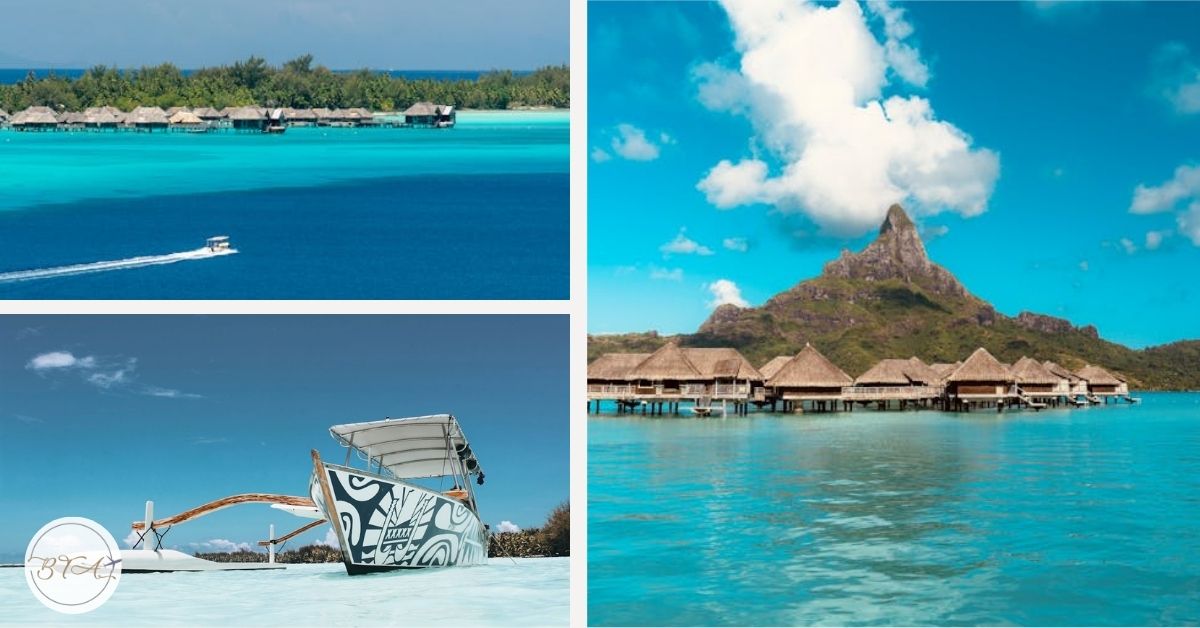
The overwater bungalow is iconic for a reason. That image stops your scroll because it represents something genuinely beautiful. But the image shows you one island, one perspective, one way of experiencing French Polynesia.
The Polynesians who first settled these islands didn’t build resorts. They built canoes. They navigated by stars and swells. They understood that these 118 islands across five archipelagos were connected by water, not separated by it. To truly experience French Polynesia, Tahiti, and Bora Bora is to move through them as they always have been traversed: by sea.
Whether you choose the curated elegance of a small-ship cruise or the private freedom of a chartered catamaran, water-based exploration reveals a French Polynesia that resort guests never see. The hidden motus. The pristine passes. The villages where visitors arrive as guests rather than tourists. The night sky unpolluted by shore lights. The simple, profound pleasure of waking up somewhere new without ever having to pack a bag.
And for families or groups willing to share the adventure, the cost is often less than you’d expect: as little as $4,000 to $6,000 per person for a week of private yacht exploration. That makes this not just the most immersive way to experience the destination, but potentially the smartest financial decision as well.
Ready to explore French Polynesia the way it was meant to be seen? Let’s plan your voyage.
—
Ready to Keep Exploring?
For more destination inspiration and planning guidance, explore the of Boutique Travel Advisors Blog.
Prefer to browse on your own? Visit Luxury Travel Clubs to self-book curated hotels, tours, and transfers.
For a fully customized journey, contact Boutique Travel Advisors to begin planning with our team.
Bora Bora private charterFrench Polynesia cruiseluxury travel French Polynesiasmall ship cruising PolynesiaTahiti yacht charter